 Sarah
Sarah
Autism Behavior Patterns: Signs, Types, and Meaning
BCBAs at Champions ABA commonly see behavior patterns emerge during three moments in particular: transitions, sensory overload, and communication frustration. A child may flap their hands during loud school assemblies as a way to manage overwhelming auditory input. Another child may shut down completely when a routine changes unexpectedly, sitting silently and refusing to engage because the predictability they depend on has disappeared. A third child may cry and push away food at dinner not out of defiance but because a texture on their plate has crossed a sensory threshold they cannot yet describe.
These are not random behaviors. They are autism behavior patterns: recurring, purposeful responses that communicate something about how a child is experiencing their world. For families in Connecticut, Massachusetts, and Colorado, understanding these patterns early is one of the most practical steps toward more effective support and a calmer daily life.
Champions ABA provides in-home ABA therapy, diagnostic evaluations, and parent training designed to identify each child’s unique behavior patterns and build skills that transfer across home, school, and community settings.
What Are Autism Behavior Patterns?
Autism behavior patterns are consistent, recurring ways a child with autism spectrum disorder (ASD) responds to sensory input, communication demands, social situations, and changes in routine. Unlike isolated behaviors that happen once, patterns repeat across similar contexts and provide meaningful information about what a child is experiencing. Autistic children show a broad range of these patterns, and what looks like an unusual reaction in one environment often makes complete sense when the underlying trigger is understood.
A single instance of avoiding eye contact does not tell the full story. But a child who consistently avoids eye contact during group activities, makes brief contact during one-on-one conversations, and disengages entirely when overstimulated is showing a pattern that tells a clinician and a parent something specific and useful.
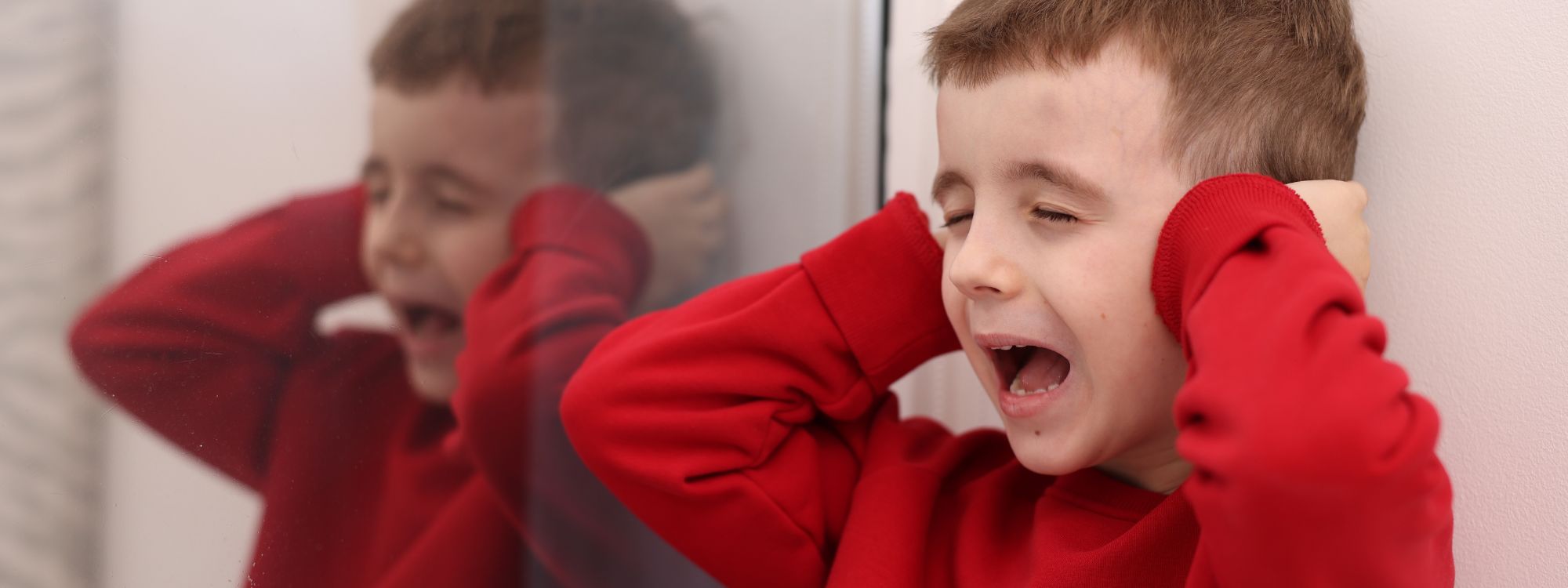
For many children, repetitive or avoidant behaviors are coping mechanisms that help reduce stress or communicate unmet needs. One common example is a child covering their ears in grocery stores because fluorescent lighting and overlapping sounds create sensory overload. The behavior looks disruptive. The function is self-protection.
When parents learn to read behavior as communication rather than opposition, their ability to respond helpfully improves significantly. That shift is one of the most consistent changes Champions ABA clinicians observe in families who go through structured parent training. Autistic people of all ages benefit when those around them understand that behavior has meaning, and that supporting individuals starts with understanding what those behaviors are communicating.
Common Autism Behavior Patterns
According to the CDC, autism spectrum disorder is characterized by persistent deficits in social communication and the presence of restricted and repetitive behaviors, with ASD now identified in approximately 1 in 31 children in the United States as of 2025. The current diagnostic manual, the DSM-5, organizes autism diagnosis around these two core areas, making an accurate diagnosis dependent on evidence of both social communication challenges and restrictive and repetitive behaviors across different ages and settings. An official diagnosis requires comprehensive evaluation by a qualified clinician rather than observation of a single behavior in isolation.
The behavioral patterns associated with ASD vary widely across children, but they tend to fall into several consistent categories.
The most common categories include:
- Social interaction differences
- Communication challenges
- Repetitive or self-stimulatory behaviors
- Sensory sensitivities or sensory-seeking behaviors
- Strong preference for routine and predictability
Understanding these categories helps parents organize what they are observing and communicate more clearly with evaluation and therapy teams.
Types of Autism Behavior Patterns
Social Behavior Patterns
Social behavior patterns in autism often reflect difficulty processing social information rather than a lack of interest in others. Children may avoid eye contact, struggle to interpret facial expressions or body language, or prefer independent play over group activities. In social settings, they may appear withdrawn, overwhelmed, or disconnected from what their peers are doing. Social communication challenges, such as difficulty reading tone of voice, understanding implied meaning, or respecting personal space without explicit instruction, are also common patterns that affect social relationships across different ages.
At school, this can look like a child who does not join games at recess, has trouble paying attention during group activities, or becomes distressed when they spend time in unstructured social situations. At home, it may show up as a preference for solitary routines over family interaction. These patterns are not a sign of indifference. They often reflect a child who finds the unpredictability of social interaction genuinely difficult to navigate, and who may need structured guidance to build the skills that neurotypical children often develop automatically.
Some of these social patterns can resemble challenging behaviors when they result in avoidance, withdrawal, or conflict. Understanding the social processing difficulties behind them is essential for responding in a way that actually helps.
Recognizing these patterns early allows caregivers to build structured, low-pressure social skills opportunities rather than placing a child in situations they are not yet equipped to handle.
Communication Behavior Patterns
Communication patterns in autism include delayed speech, limited verbal expression, echolalia (repeating words or phrases), and reliance on gestures or alternative communication methods. Some children communicate effectively in structured, familiar settings but struggle when communication demands increase or contexts shift.
Frustration is a common result. When a child cannot express that they are in pain, that they need a break, or that a sensory experience is overwhelming, behavior becomes the only available outlet. A child who bites their arm during a task transition may be communicating “this is too much” rather than acting out.
ABA therapy addresses this directly by teaching children functional communication skills that replace behavior-based expression, reducing frustration and the behaviors that stem from it.
Repetitive and Self-Stimulatory Behaviors
It is commonly called stimming include hand flapping, rocking, spinning, lining up objects, or repeating specific phrases or sounds. Repetitive body movements like these are not purposeless. They help children regulate their nervous system, manage sensory input, and reduce anxiety in overstimulating or unpredictable environments. Some children also develop ritualistic behavior patterns around specific routines or objects, where any deviation causes significant distress.
Restrictive behaviors, another category within restricted and repetitive behaviors, can include narrowly focused interests, rigid adherence to the same routine, or insistence on sameness in everyday activities. In more severe presentations, restrictive behaviors may include self-injury such as head banging or skin picking, which signal a nervous system under extreme stress rather than deliberate self-harm.
Research studies published in the Journal of Autism and Developmental Disorders (2024) tracked 1,517 children from infancy to school age and found that early sensory patterns, including repetitive movements and sensory-seeking behaviors, were predictive of later social-communication difficulties and adaptive functioning outcomes. This confirms that repetitive behaviors are not isolated quirks. They are clinically meaningful signals that, when identified early, can guide more targeted intervention.
The goal in ABA therapy is not to eliminate stimming outright but to understand its function and, where behaviors interfere with learning or safety, to build alternative regulation strategies.
Sensory Behavior Patterns
Sensory behavior patterns involve how a child responds to sights, sounds, textures, tastes, and physical sensations. Some children are hypersensitive, reacting strongly to input that others barely notice. Others are hyposensitive and actively seek intense sensory experiences to feel regulated.
A child who gags at the smell of certain foods, refuses clothing with tags, or melts down in the cereal aisle of a grocery store is not being difficult. Their sensory system is processing the environment in a way that neurotypical individuals do not experience. These sensory sensitivities affect eating, dressing, attending school, and participating in family activities in ways that can be exhausting for everyone involved.
Addressing sensory behavior patterns often involves a combination of environmental modification, gradual desensitization, and building a child’s tolerance and self-regulation skills over time.
Routine and Rigidity Patterns
Children with autism often rely on routine and predictability as a coping strategy. When the world feels unpredictable, following the same routine each day provides structure and safety. Changes, even minor ones like taking a different route home or serving a different brand of crackers, can trigger significant distress. This pattern often coexists with other characteristics of autism, such as sensory sensitivities and communication challenges, creating situations where multiple stressors compound each other. A child who is already overwhelmed by bright lights and crowded hallways at school may have very little tolerance left for a routine change when they get home.
This rigidity is not stubbornness. It is a nervous system seeking stability. Supporting children through routine disruptions means preparing them in advance, using visual schedules and transition warnings rather than expecting spontaneous adaptation. Over time and with structured support, many children build greater flexibility. But that flexibility develops through gradual, supported exposure to change, not by simply removing routine.
Behavior Patterns Overview
| Behavior Pattern | What It Looks Like | What It Means | What Helps |
| Social | Avoids eye contact, prefers alone time | Difficulty processing social cues | Structured social practice |
| Communication | Limited speech, repeating words | Expressing needs differently | Speech and ABA support |
| Repetitive | Hand-flapping, rocking | Emotional and sensory regulation | Understanding function first |
| Sensory | Covers ears, seeks pressure | Sensory processing differences | Sensory-friendly environments |
| Routine | Distress with changes | Need for predictability | Visual schedules, advance preparation |
What Causes Autism Behavior Patterns?
Autism behavior patterns are rooted in neurological differences that affect how children process sensory input, regulate emotions, and interpret social and communication demands. These are not learned behaviors or the result of parenting choices. They reflect genuine differences in how the brain develops and processes information.
For many children, the environment is simply harder to navigate. A busy classroom with fluorescent lighting, overlapping conversations, and unpredictable transitions can push a child’s nervous system to its limit before the school day is half over. When that limit is reached, behavior becomes the communication.
Emotional regulation is a particularly important factor. Children with autism often experience strong emotions but have limited tools for managing them in the moment. This is not a character flaw. It is a skill gap that ABA therapy is specifically designed to address by building coping strategies through structured, repeated practice in real-life settings.
How Autism Behavior Patterns Change With Age
Behavior patterns in autism are not fixed. They evolve as children grow, and the trajectory depends heavily on the support a child receives during critical developmental periods.
Research from the Autism Research Institute found that approximately half of children with autism show changes in symptom severity across early and middle childhood. Of children tracked from ages 3 to 6, 29% showed significant decreases in symptom severity while 17% showed increases. The same patterns largely held when children were reassessed around age 11. This variability underscores an important point: behavior patterns in autism are not a fixed endpoint, and earlier support consistently shapes better trajectories.
A 3-year-old receiving structured communication support may develop very different coping skills by elementary school compared to a child whose sensory needs remain unsupported. A 2025 study published in Frontiers in Pediatrics found that children receiving ABA therapy showed significant improvements across cognitive, verbal, expressive language, receptive language, social reciprocity, and emotional expression after six months of structured intervention.
What Behavior Patterns Typically Look Like by Age
- Very young children and toddlers (ages 1 to 3): Communication delays, limited response to name, early repetitive body movements, or unusual reactions to sensory input are often the first patterns parents and pediatricians notice. In early childhood, these signs can be subtle and are sometimes dismissed as developmental variation until a pattern becomes clear
- Preschool age (3 to 5): Social differences become more apparent as peer interaction increases. Routine rigidity and sensory sensitivities often become more visible in structured settings like preschool. This is often when many individuals receive their first autism diagnosis
- School age (6 to 12): Academic demands, social complexity, and less structured environments can amplify communication and behavioral challenges. Some autistic children develop masking behaviors that hide difficulties until stress accumulates
- Teenagers: Increased social awareness and the complexity of peer relationships can affect confidence and mental health. Many individuals in this age group are at higher risk for anxiety disorders, depression, or obsessive-compulsive disorder as co-occurring conditions alongside autism. Some adolescents who were previously diagnosed under terms like autistic disorder or Asperger’s syndrome are now evaluated under the unified autism spectrum disorder framework in the current diagnostic manual
When Behavior Patterns Become a Safety Concern
Most autism behavior patterns are not safety risks, but some warrant immediate attention and professional evaluation. Parents should seek prompt support when a child:
- Engages in self-injurious behaviors such as head-banging, biting themselves, or hitting their own body repeatedly
- Runs away from caregivers or safe spaces without warning, known as elopement
- Shows aggression toward others that is escalating in frequency or intensity
- Stops eating or sleeping to a degree that affects physical health
Research tracking aggression in children with autism across ages 2, 9, and 18 found that 31% of participants showed persistent aggression over time, while 25% showed increasing aggression. Children with higher autism symptom severity and fewer developed adaptive skills were more likely to fall into those groups, reinforcing why early, targeted support matters before patterns become entrenched.
A diagnostic evaluation followed by a functional behavior assessment is the appropriate starting point when safety-related patterns are present.
How to Recognize Autism Behavior Patterns Early
A 2025 CDC report noted that early identification rates have improved, with more children being identified before age 4 than in previous years. Early identification matters because the earlier a child’s behavior patterns are understood, the sooner support can be tailored to their specific needs.
Parents should look for consistent patterns such as:
- Limited or inconsistent eye contact in social situations
- Delayed or unusual communication development
- Repetitive movements or specific attachment to objects or routines
- Strong sensory reactions to everyday environments
- Significant distress during transitions or changes in routine
One or two of these signs in isolation may not indicate autism. But when several appear consistently across multiple settings, a professional evaluation is worth pursuing. A diagnostic evaluation provides a structured assessment of the child’s strengths and challenges and guides the most appropriate support pathway.
How ABA Therapy Addresses Behavior Patterns
ABA therapy works by identifying the function behind each behavior pattern and building the specific skills that address it. Rather than focusing on stopping a behavior, the goal is to understand why it is happening and replace it with something more effective.
A narrative review published in PMC (2025) analyzing early intensive behavioral interventions found that well-targeted, developmentally appropriate ABA interventions achieved meaningful improvements in communication, adaptive behavior, and social engagement, and that parent-coaching models were particularly effective when caregivers implemented strategies consistently at home.
At Champions ABA, BCBAs conduct structured observations and functional assessments before developing a treatment plan. This means every strategy is tied to a specific pattern, a specific function, and a specific child. The plan is then adjusted over time based on data collected across sessions.
Key areas ABA therapy targets include:
- Communication skills that replace behavior-based expression
- Emotional regulation strategies for managing overwhelming situations
- Daily living skills that support independence across routines
- Behavior goals tied to real-life outcomes rather than compliance for its own sake
- Caregiver coaching so strategies are applied consistently outside of sessions
Supporting Your Child at Home, School, and in the Community
Behavior patterns do not exist only in therapy sessions. They show up at breakfast, on the school bus, at the grocery store, and at birthday parties. Supporting a child effectively means building consistency across all of those environments.
Helpful strategies that Champions ABA families use across settings include:
- Creating predictable daily routines with visual supports at key transition points
- Preparing children for changes in advance using social stories or first-then boards
- Reducing sensory load in high-stress environments where possible
- Offering structured breaks before stress accumulates rather than after it peaks
- Coordinating with school teams so the same language and strategies are used across settings
- Celebrating small wins consistently, because progress in autism behavior patterns builds gradually, and recognition reinforces it
When families, schools, and therapists use consistent strategies across settings, children often adapt more successfully and experience less daily stress.
Conclusion
Many autism behavior patterns change over time, especially when children receive support that matches their communication, sensory, and emotional needs. They are meaningful, recurring responses that tell a story about how a child is experiencing their world. When parents learn to read that story, they move from reacting to behaviors to understanding them, and from frustration to informed, effective support.
According to the CDC and NIH, early behavioral intervention is associated with improvements in communication, adaptive functioning, and social engagement in many children with autism. Children who receive early support often build communication and coping skills more effectively over time than children whose needs go unrecognized.
If you are ready to better understand your child’s autism behavior patterns and build clear, effective strategies that support daily life, Champions ABA is here to help. Families across Connecticut, Massachusetts, and Colorado trust our team for personalized, evidence-based ABA therapy, including in-home support, center-based programs, and comprehensive diagnostic evaluations. Contact us today to schedule your child’s assessment and start building an individualized plan that supports communication, behavior, and long-term progress.
FAQs
What are the 4 main behavior patterns of autism?
The four most commonly discussed behavior pattern categories in autism are social communication differences, repetitive or self-stimulatory behaviors, sensory sensitivities or seeking behaviors, and a strong preference for routine and predictability. These categories come from the diagnostic framework established by the DSM-5 and used by clinicians and ABA professionals to evaluate and support children with ASD. Each category can look very different from one child to another, which is why individualized assessment matters more than checking boxes.
How do autism behavior patterns change as children get older?
Behavior patterns in autism are not fixed. Research from the Autism Research Institute found that approximately half of children with autism show meaningful changes in symptom severity between early and middle childhood. Some children see significant improvement with structured support, while others may experience increases in certain patterns, particularly around social anxiety or rigidity, as demands grow. Early intervention is one of the strongest factors in shaping a more positive trajectory over time.
How do you recognize autism in adults?
Autism in adults may appear as difficulty with social interactions, strong routines, sensory sensitivities, or challenges with communication. Some adults develop masking strategies over time that make these patterns less visible until stress or burnout reveals them. A professional assessment from a qualified clinician can help clarify whether autism is present and what type of support would be most helpful.
Can ABA therapy improve autism behavior patterns?
Yes. ABA therapy identifies the function behind each behavior pattern and teaches skills that address the underlying need directly. Rather than focusing only on reducing unwanted behavior, it builds communication strategies, emotional regulation tools, and daily living skills. A 2025 study published in Frontiers in Pediatrics found that children receiving ABA therapy showed significant improvements across expressive language, receptive language, social reciprocity, and emotional expression after six months of structured intervention.